The full picture
Sources, ledger and outputs on one page.
Click the image to open it full size.
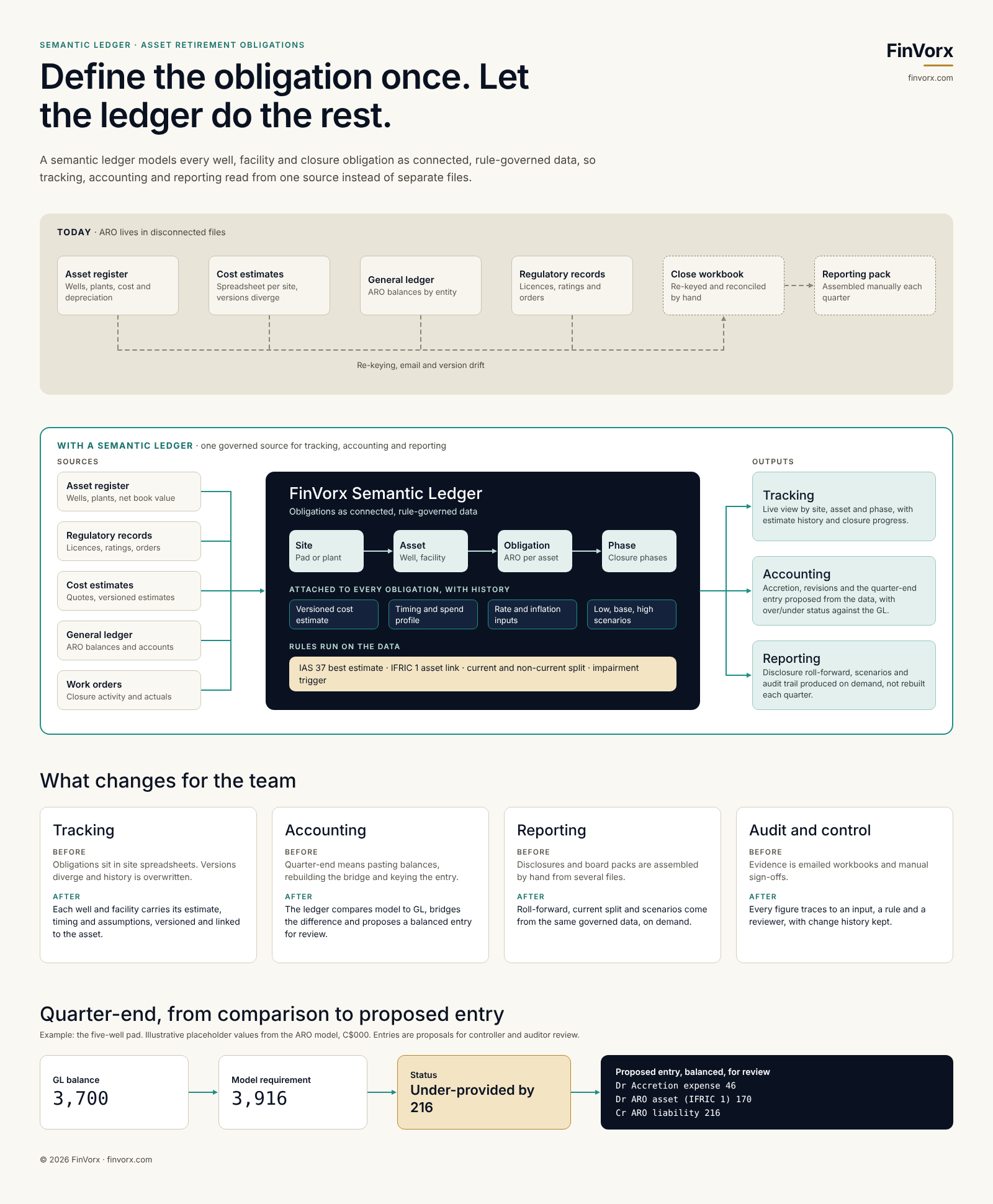
How a semantic ledger models asset retirement obligations (AROs) as connected, rule-governed data, so tracking, accounting and reporting read from one source instead of separate files.
Walkthrough, about one minute.
Obligations sit in site spreadsheets. Versions diverge and history is overwritten.
Each well and facility carries its estimate, timing and assumptions, versioned and linked to the asset.
Quarter-end means pasting balances, rebuilding the bridge and keying the entry.
The ledger compares model to GL, bridges the difference and proposes a balanced entry for review.
Disclosures and board packs are assembled by hand from several files.
Roll-forward, current split and scenarios come from the same governed data, on demand.
Evidence is emailed workbooks and manual sign-offs.
Every figure traces to an input, a rule and a reviewer, with change history kept.
Click the image to open it full size.
The ledger compares the model requirement to the GL balance, shows the over or under status, and proposes a balanced entry for the controller and auditor to review.
The rules it applies include IAS 37 best estimate, the IFRIC 1 asset link, the current and non-current split, and impairment triggers.
A short conversation is enough to tell whether a semantic ledger approach would help your team. All discussions are confidential.